IPL vs Diode Laser Hair Removal: A Clinician's Evidence-Based Guide
IPL vs Diode Laser Hair Removal: A Clinician's Evidence-Based Guide
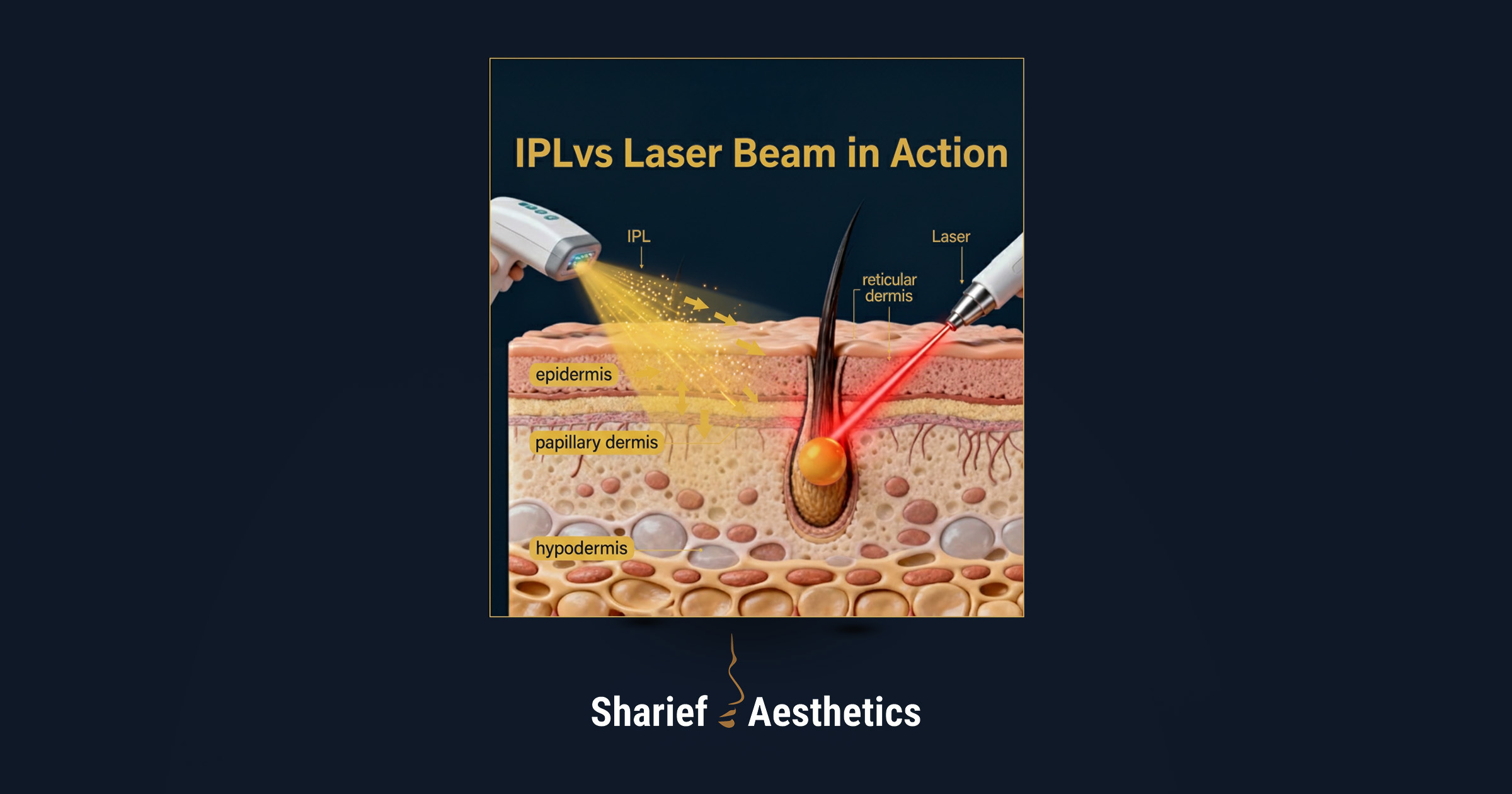
The evolution of light-based technologies has provided powerful tools for long-term hair reduction. While often grouped together, Intense Pulsed Light (IPL) and Diode Laser are fundamentally different modalities with distinct mechanisms of action. This guide delves into the science behind these technologies, supported by dermatological principles and clinical evidence, to empower both practitioners and patients in making informed decisions.
Foundational Science: Skin Anatomy and Hair Follicle Target
The efficacy of all light-based hair removal hinges on the principle of selective photothermolysis. This process requires a specific wavelength of light to be absorbed by a target (melanin in the hair follicle) over a short period (nanoseconds to milliseconds) to generate enough heat to destroy the target without damaging the surrounding tissue. Understanding the skin's structure is critical to this process:
- Epidermis: The outermost layer contains melanin. Its density varies by skin tone (Fitzpatrick Type I-VI), which directly influences treatment parameters and safety.
- Dermis: This layer houses the hair follicle, the primary target. The follicle is richest in melanin in its bulb and papilla—the stem cell-rich region responsible for hair growth.
- Hypodermis: While deeper follicles extend here, the light energy's goal is to reach the dermal-papillary interface.
Light Technology: A Matter of Physics
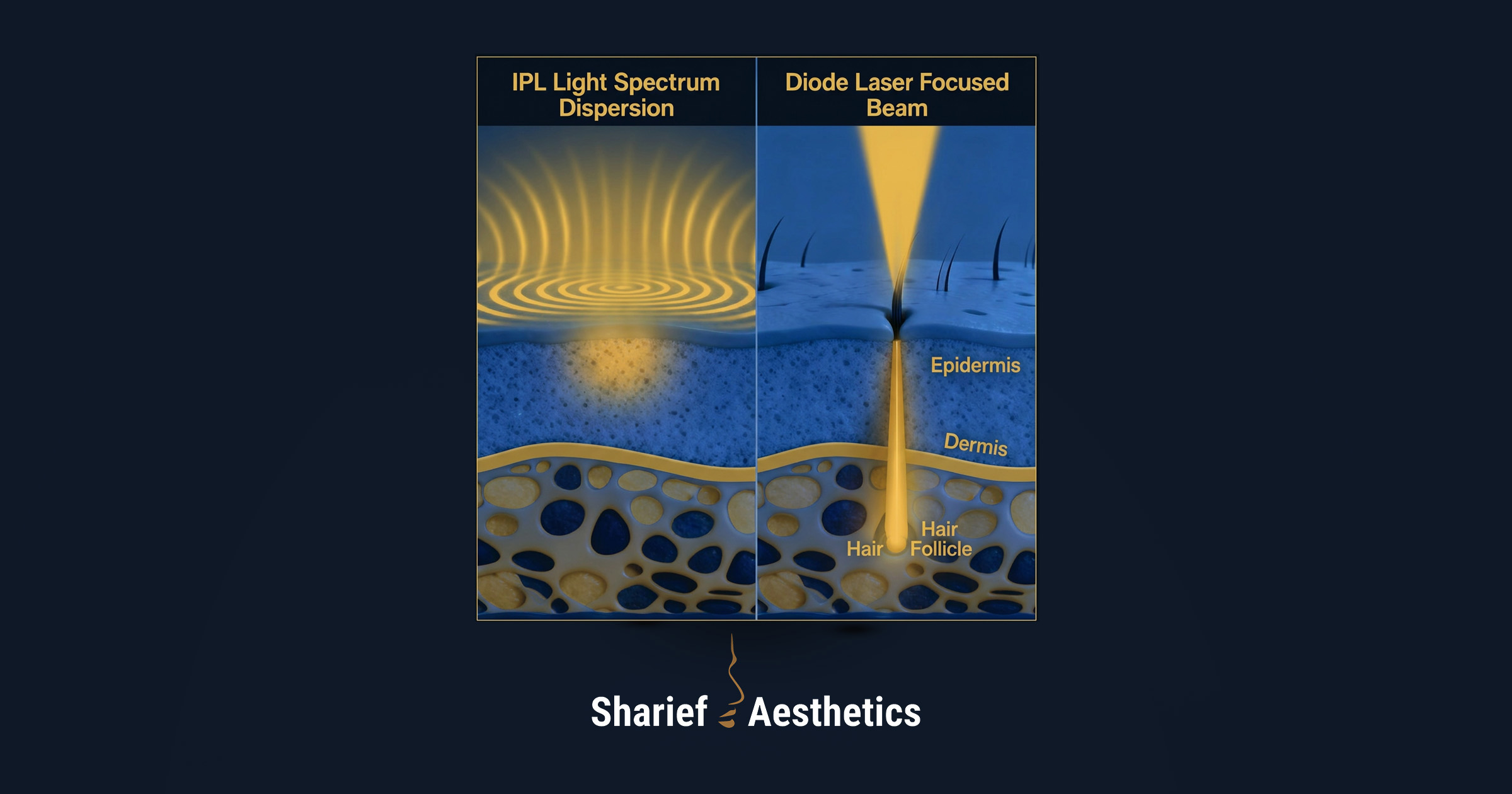
IPL (Intense Pulsed Light): The Scattered Approach
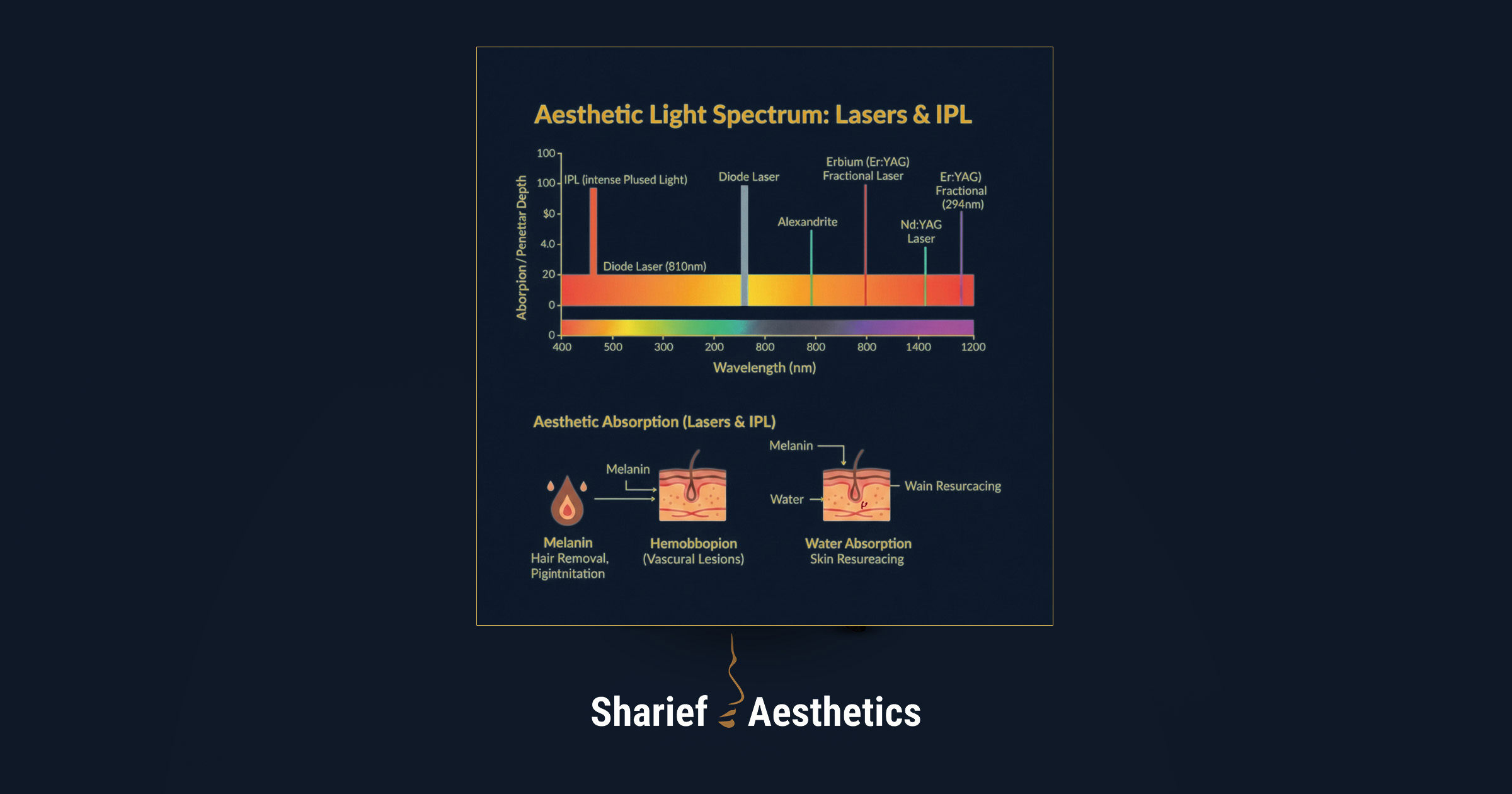
- Mechanism: IPL is not a laser. It emits a polychromatic (500-1200 nm) and non-coherent broad spectrum of light.
- Interaction with Skin: The broad spectrum contains many wavelengths absorbed by competing chromophores. This lack of focus means energy scatters, resulting in a less efficient delivery of heat to the follicle.
- Clinical Implication: The scattered energy requires higher fluences to be effective, which increases the risk of side effects like burns or hyperpigmentation, especially in darker skin tones.
Diode Laser: The Precision Instrument
- Mechanism: The diode laser produces a monochromatic (single wavelength, typically 800-810 nm) and coherent beam of light. This wavelength is specifically chosen for its optimal absorption by melanin and its ability to penetrate deeply into the dermis.
- Interaction with Skin: The focused beam bypasses the epidermis with minimal scatter, delivering a high concentration of energy directly to the melanin-rich hair bulb.
- Clinical Implication: This precision allows for higher, more effective fluences to be used safely. Advanced integrated cooling systems further protect the epidermis, making diode lasers effective and safe for a broader range of skin types.
Clinical Insights and Evidence-Based Outcomes
- Efficacy: Systematic reviews and meta-analyses consistently show that laser systems (including diode) achieve superior long-term hair reduction compared to IPL.
- Treatment Experience: Patients typically report that diode laser treatments are faster and more comfortable due to the rapid, precise pulses and advanced cooling.
- Hair and Skin Type Suitability: For dark hair, diode lasers are the unequivocally superior technology. Neither technology works well on light-colored hair (blonde, red, grey) due to low melanin.
Safety, Selection, and The Importance of Expertise
- Safety Profile: Both technologies are safe when performed by a qualified professional. The risk of burns or pigmentary changes is inherently higher with IPL due to its less selective nature.
- The Practitioner is Key: The best technology in unskilled hands can yield poor results or cause injury. An expert consultation should include a Fitzpatrick skin type assessment, medical history, and a test patch.
Conclusion
The choice between IPL and Diode Laser is not merely a preference but a clinical decision based on physics and biology. Diode Laser represents the gold standard for professional hair removal. Its precision, efficacy, and safety for a wider range of skin types make it the preferred choice for clinicians seeking predictable, long-lasting results.
Ultimately, the most important factor is not just the device, but the expertise of the professional operating it. A knowledgeable practitioner will honestly assess your candidacy for each technology and set realistic expectations for your hair removal journey.