How Laser Vein Removal with Vasculaze Works: What You Need to Know

Visible veins on the legs and face are common, ranging from delicate spider veins to slightly larger reticular veins. While usually cosmetic, they can signal underlying venous stress. Understanding the schedule, the aftercare, and how much can realistically be treated at once is what separates a good result from a disappointed one.
Why Those Veins Appeared
Veins have one-way valves that keep blood moving toward the heart. When those valves weaken, blood pools and the pressure stretches the vessel wall until it shows through the skin.
- Spider veins: fine red or blue webs close to the surface.
- Reticular veins: larger blue-green vessels sitting deeper, up to about 4mm, which often feed the webs above them.
That second point matters. Treating the surface web while leaving its feeder intact is a common reason results disappoint.
How the Laser Works
Selective photothermolysis. The laser emits a wavelength that haemoglobin absorbs strongly and surrounding tissue largely ignores, so the energy heats blood inside the vessel rather than the skin above it. The wall is damaged from within, collapses and seals. Blood reroutes immediately through healthier vessels — the treated vein was not doing useful work — and the body absorbs the sealed vessel over the following weeks.
Whether a laser or a needle is the right instrument for your particular vessels is a separate question, covered in Laser or Needle: The Choice Was Never Close.
The Session, and How Much It Covers
Eye protection, cooling gel, then the handpiece guided over the vessels. Each pulse feels like a rubber band snapped against the skin, followed by the cooling head. Fifteen to thirty minutes.
Here is the part rarely mentioned in advance: a full leg is not one session. Vessels are treated individually, which is slow, and past a certain point the session becomes too uncomfortable to sit through. A realistic target is roughly a 10×10 cm area at a time, depending on how many vessels sit within it and how densely. Larger areas are staged across visits — a scheduling reality, not an upsell.
The Schedule: 0, 3 and 6 Weeks
Sessions are booked at weeks 0, 3 and 6, which is also the manufacturer’s protocol and the maximum I will do.
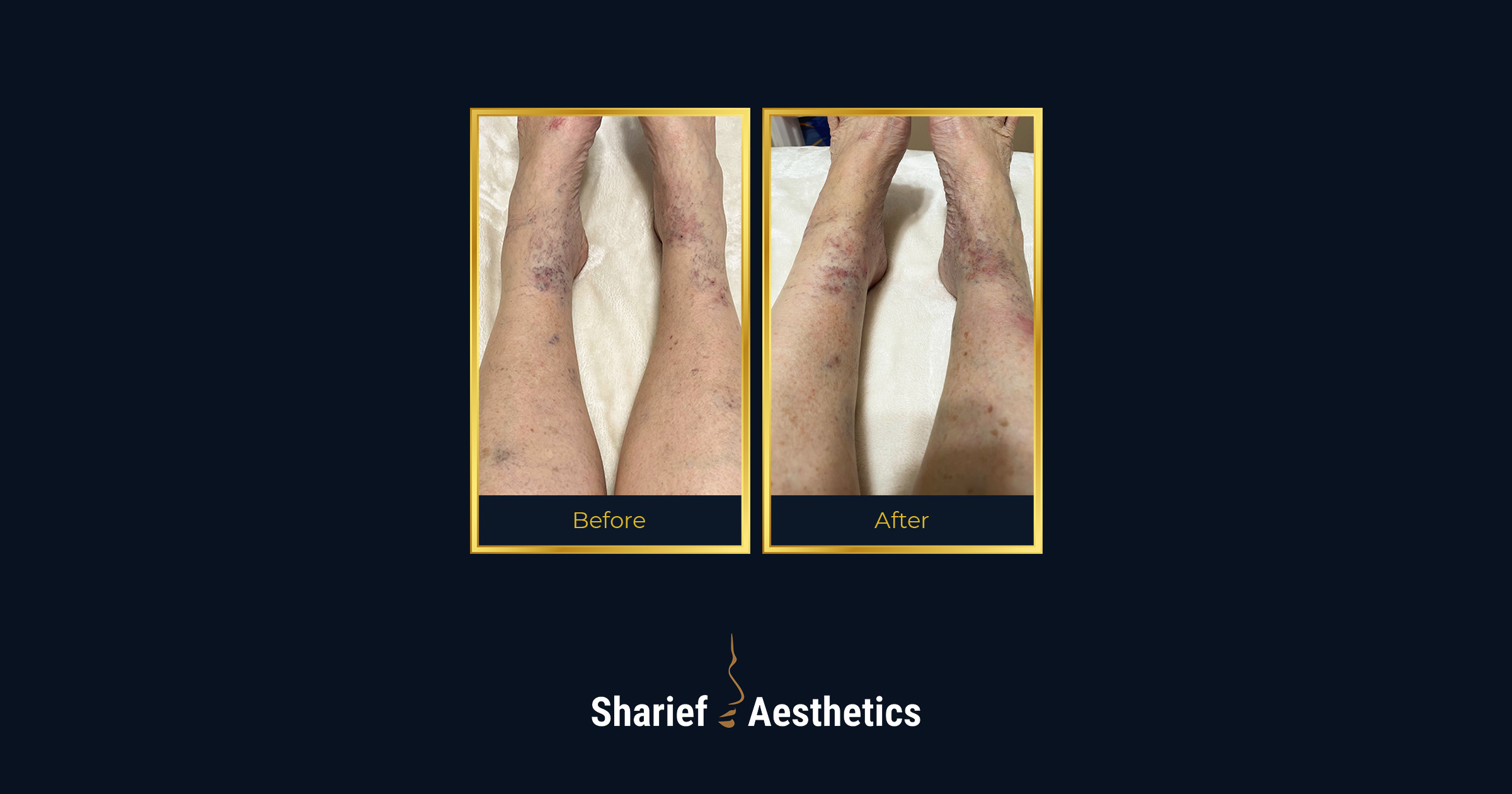
At the three-week review, a treated reticular vessel is typically about half its original size and has partially refilled. That is expected rather than failure, and it is treated again at higher power. In practice that second session is usually the last one. Fine surface spider veins often need only the first.
I book the six-week visit regardless, because I cannot know at week 0 who will need it. If you call and tell me it has cleared, I will tell you not to come. If you would rather come in to photograph the result or discuss something else, that is a good use of the appointment.
Recovery and Compression
Immediately afterward the skin looks pink and feels warm, like mild sunburn, and treated vessels often look darker before they fade.
Discomfort depends entirely on vessel size. After a 4mm reticular vein is sealed, expect a dull ache along its line for up to three weeks, worse at the end of a day on your feet — clinically it is close to the ache of a superficial thrombophlebitis, which is essentially what it is. After fine spider vein work, there is no meaningful ache at all; honestly, the stockings are the least comfortable part.
Compression: continuously for the first 48 hours, then during the day whenever you are on your feet. For reticular work this is not optional. It supports the vessels still doing the job and reduces the pressure that stretched the treated one in the first place.
Avoid strenuous exercise, heavy lifting, hot tubs and saunas for the first few days. Ordinary walking helps.
What “Gone” Actually Means
A vessel properly sealed and absorbed does not come back as itself. That is a real and durable result.
Two honest qualifications: a treated vessel can occasionally recanalise, which is one reason the same vein is sometimes treated twice; and nothing here prevents new veins forming, because nothing here addresses why the first ones appeared. Genetics, standing work, pregnancy and time all continue. Ongoing compression is what slows that.
Who It Suits
Vasculaze works well on spider and reticular veins up to about 4mm. Beyond that size, or where the real problem is a failing valve higher up the venous system rather than the visible vessel, this is the wrong tool and you should be assessed properly rather than treated cosmetically. A visible vein is sometimes a symptom.
It is not appropriate in pregnancy, with certain clotting disorders, or over recently tanned skin. Full history at consultation, every time.