Letybo: A Neurotoxin Option in Canada
I have used Botox, Xeomin, Dysport, and several others over the course of my practice. Letybo was not one I expected to distinguish itself from that list. It did.
What struck me clinically was straightforward: onset arrived faster than I anticipated, and the muscle relaxation held with a precision I don't associate with a "newer" product. When I looked into why so few practitioners in this province were discussing it, I found the answer had nothing to do with the drug itself — there was, as far as I could find, no clinical branding or professional material representing it in this market at all. That gap is worth correcting. This article is my attempt to do so.
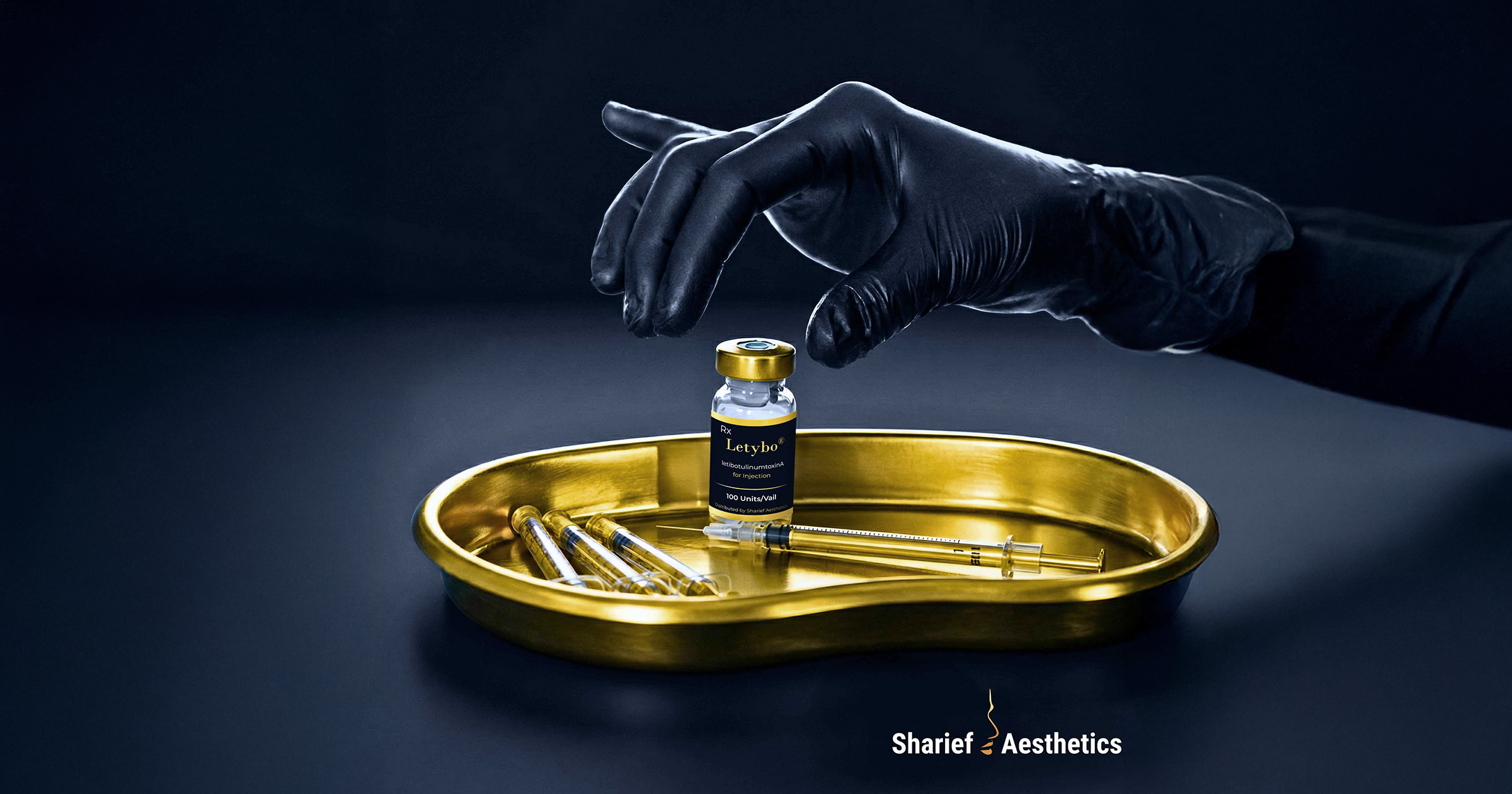
What Letybo Is
Letybo is a botulinum toxin type A produced by Hugel, Inc., and available in Canada through Hugel Canada Inc. It was developed in South Korea, where it has held the top-selling position in its domestic market for several consecutive years — a scale of adoption that hasn't yet made it to Halifax. Health Canada approved Letybo on June 14, 2022, for the treatment of moderate to severe glabellar lines—the vertical frown lines between the eyebrows.
How It Works — And What I've Actually Observed
Like all botulinum toxin type A products, Letybo works by temporarily reducing the release of acetylcholine at the neuromuscular junction. This relaxes the targeted muscle, which softens the dynamic wrinkles caused by repeated muscle movement. The effect is temporary and gradually wears off as normal muscle activity returns.
Here is where I'll be direct instead of diplomatically vague: in my own practice, Letybo has become the neuromodulator I reach for most. A few things stand out clinically. Onset can begin as early as day three—faster than what many patients expect, and consistent with published clinical data showing visible improvement within 2–3 days. Its diffusion profile also stays remarkably controlled; an independent, peer-reviewed split-face trial found Letybo produced a significantly smaller diffusion area than both onabotulinumtoxinA and abobotulinumtoxinA. That matters most on strong, compact muscles like the procerus and corrugator, where you need real strength without unwanted spread into neighbouring muscles like the frontalis.
There's one pattern I haven't been able to fully explain yet, and I'd rather say so than pretend otherwise. My working theory: it isn't just spreading less—it's engaging every receptor it reaches more completely. The full mechanism isn't settled science yet.
"After enough patients, a pattern stops being a coincidence and starts being a question worth asking out loud."
Concretely: at matched dosing and identical dilution, I typically need two to three times more injection points with Xeomin to achieve the same result I get from Letybo. Part of this is likely no mystery at all—potency units are specific to each manufacturer's own bioassay and are not interchangeable between products, a principle stated plainly in botulinum toxin prescribing information. Equal unit counts on paper don't necessarily mean equal biological dose. But whether that fully accounts for what I'm seeing, or whether more complete receptor engagement is also doing real work, isn't something the current literature has settled. I'd rather flag that honestly than dress up a clinical hunch as proven fact.
What It Is Approved For
In Canada, Letybo is approved specifically for glabellar lines. As with other neuromodulators, clinicians may use botulinum toxin in other facial areas based on clinical judgment and the published literature; any such use is discussed with you in advance as part of informed consent.
Safety and What to Expect
As with any botulinum toxin treatment, the most common effects are temporary and localized—mild redness, swelling, or bruising at the injection sites, which typically resolve within a few days. Sessions are usually brief, and most people return to normal activities the same day. A medical assessment beforehand determines whether the treatment is appropriate for you and reviews your individual risks.
Where Letybo Fits
Several botulinum toxin type A products are approved in Canada, and they share the same basic mechanism. Choosing among them is a clinical decision made with you, based on your anatomy, your goals, the treatment area, and your previous experience with neuromodulators. I've used the major options available here myself, over years of practice—Letybo is simply the one that made me stop and pay attention. There is no single product that is right for everyone; the choice is individualized, but it should at least be a choice you know you have.
Booking a Consultation
Every neuromodulator treatment at Sharief Aesthetics begins with a consultation and medical assessment, so the plan is tailored to you. Consultation fees apply and are explained in advance. If you would like to understand your options—including one most patients in this province have never heard of—you are welcome to book a consultation.