The Truth About Microneedling vs. RF Microneedling
Same needles, the same serums layered on top — but radiofrequency makes them different treatments. Here's the difference the marketing works hard to blur.
Two treatments share the word "microneedling" and almost nothing else. One makes tiny channels in the skin. The other makes those channels and remodels the deep tissue with heat. They produce different results, carry different risks, justify different prices — and an entire corner of the aesthetics market survives on keeping you from noticing the gap between them. The blur isn't an accident. It's the business model.
So let's un-blur it.
What plain Microneedling actually is

Traditional microneedling — a pen or roller, sometimes called collagen induction therapy — drives fine needles into the skin to create controlled micro-injuries. Your body reads those tiny wounds as something to repair and lays down new collagen in response. As a bonus, the channels it opens let topical products absorb far better than they would through intact skin, which is exactly why it's so often paired with PRP or polynucleotides applied to the surface.
This is a legitimate, useful treatment. For skin texture, tone, fine lines, enlarged-looking pores, and certain superficial scars, it earns its place. None of what follows is an argument that mechanical microneedling is bad.
It's an argument about one thing it cannot do: it does not tighten skin. There's no heat involved, and meaningful tightening requires heat to contract and remodel the deeper tissue. Mechanical needles alone can't reach that lever.
What the "RF" adds
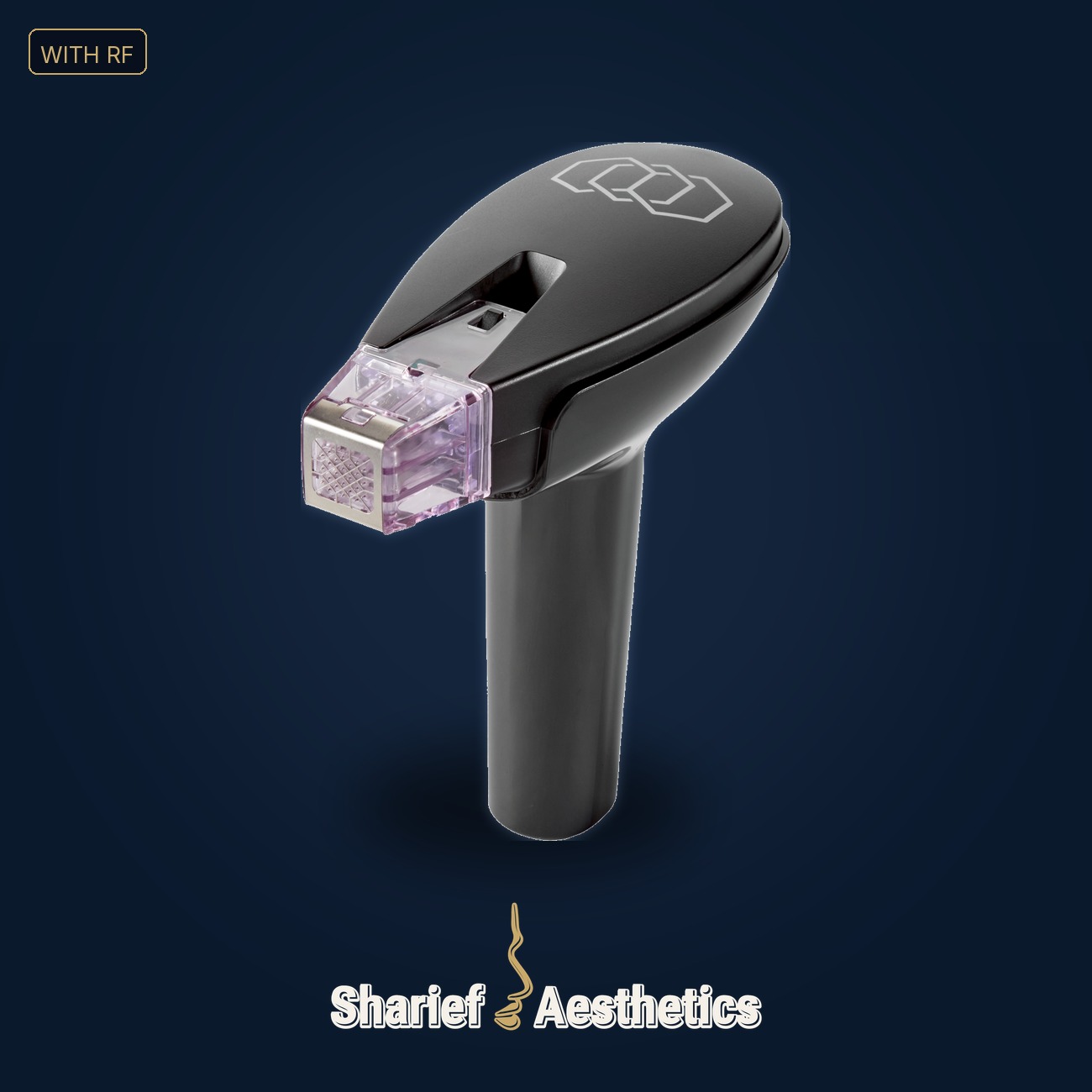
RF microneedling — the category Morpheus8 belongs to — uses needles too, but delivers radiofrequency energy from their tips once they're in the skin. Now you have two things happening at once: the same mechanical channel, plus a zone of controlled thermal injury deep in the dermis. That heat is the whole point. It drives a stronger collagen-and-elastin remodeling response, reaches deeper than mechanical needles go, and — critically — it's what produces actual tissue tightening and contour change.
That's not a marketing nuance. It's a different mechanism with a different ceiling. The single syllable "RF" is the difference between a treatment that refines the skin's surface and one that remodels its architecture.
Why the serum is a distraction
Here's where the marketing does its work. Salmon DNA, PDRN, PRP — the regenerative agent everyone is advertising — rides on top of either engine. You can have mechanical microneedling with PRP. You can have RF microneedling with PDRN. The agent is often identical. The device underneath it is not.
So when a treatment is sold to you on the strength of the serum — "salmon-DNA facial," "vampire facial," "growth-factor microneedling" — the headline is pointing at the smallest variable in the room. The thing that actually determines whether your skin tightens or merely refreshes is the device, and the device is the part the buzzword conveniently leaves vague.
How the mislabeling works
Once you see it, you can't unsee it. "Micro-needling" gets used loosely to borrow the reputation of results only radiofrequency can deliver. The letters "RF" get added or dropped depending on what sells. A home roller, a mechanical pen, and a medical radiofrequency platform — three genuinely different things at three wildly different price points and capability levels — all get flattened into the same friendly word. A patient pays for "microneedling with growth factors," picturing lift and tightening, and receives a treatment that was never physically capable of producing it.
The ambiguity isn't a communication failure. For a certain kind of advertising, it is the marketing — the vagueness is doing the selling.
The two questions that cut through all of it
You don't need a clinical degree to protect yourself. You need two questions:
- Is this mechanical microneedling, or radiofrequency microneedling? If the answer is fuzzy, that's your answer.
- What's the device, how deep does it treat, and who's setting it? A named medical platform and a clinician who can speak to depth and energy is a different proposition than a buzzword and a price.
Notice what isn't on that list: which serum. The agent is the last thing to ask about, not the first — and any treatment that leads with the serum is hoping you'll never get to the questions that matter.
The bottom line
Mechanical microneedling and RF microneedling are both real tools, and each is the right answer for different goals — surface refinement versus structural remodeling and tightening. There's nothing wrong with the simpler one. There's a great deal wrong with selling it as the other, and with letting a fashionable serum stand in for a straight answer about what device is touching your skin.
Ask which engine you’re buying. Any clinician should be able to answer that plainly — and tell you just as plainly when the simpler treatment is the one you actually need
Not sure which one you actually need?
The right answer depends on your skin and your goal — not on whichever serum is being advertised. If you'd like a physician's assessment instead of a guess, book a consultation or call the clinic.
Book a Consultation · or call 902.423.7919