The Truth About Under-Eye Bags

Almost every week, a patient in our Halifax clinic points to the area under their eyes and asks which cream will make these under-eye bags go away. It is a fair question, and the plain answer is the one the marketing never gives you. No cream removes an under-eye bag, because most bags are not a skin problem at all. And the products that promise to firm the eyelid are the ones I ask patients to put down, for a reason that has little to do with whether they work.
What causes under-eye bags?
An under-eye bag is usually a mix of four separate things, and they do not respond to the same treatment. Telling them apart is the whole job.
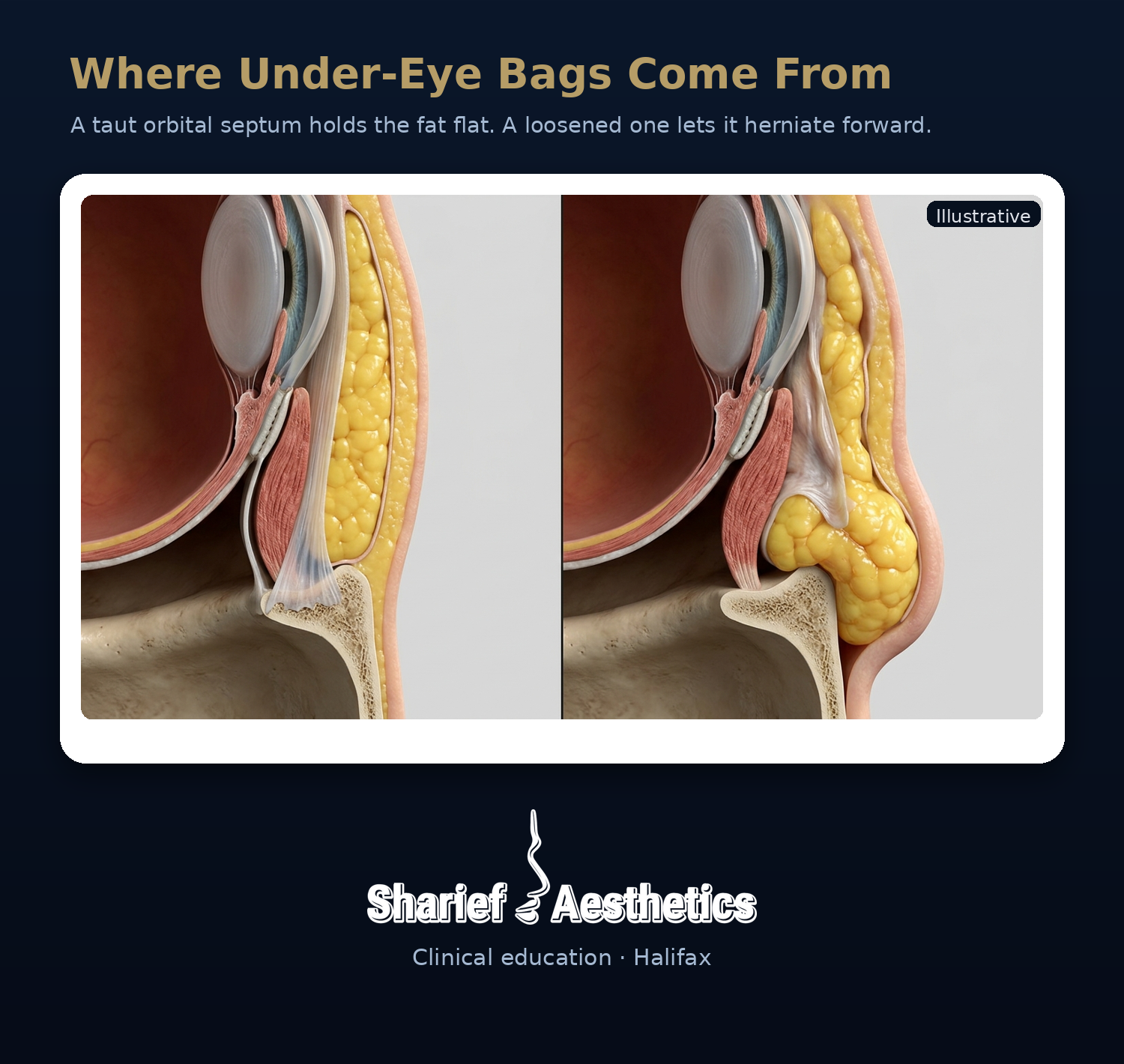
Behind the lower lid sit small pads of orbital fat, normally held flat by a thin sheet of tissue called the orbital septum.

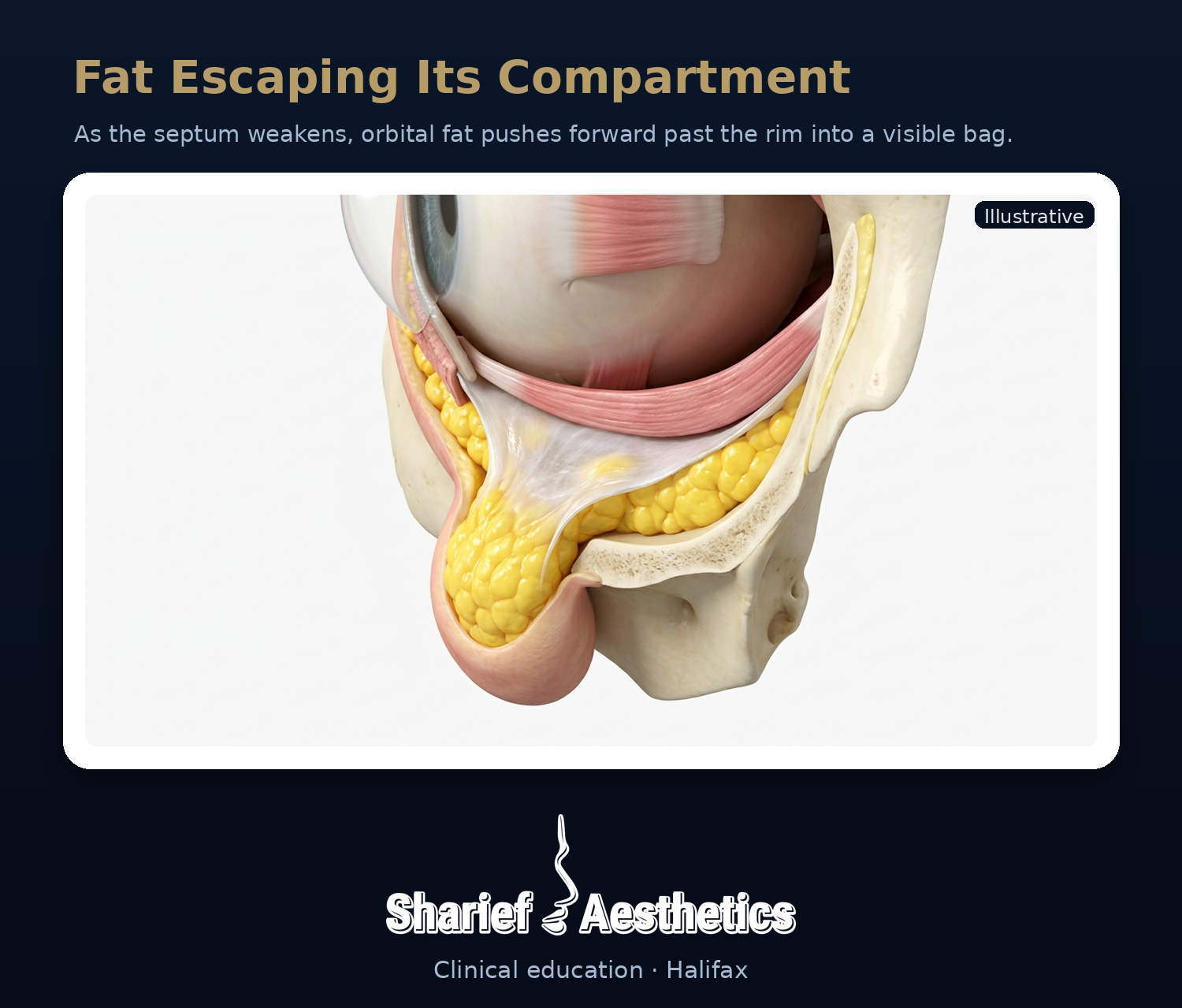
Over time that sheet loosens and the fat pushes forward, the way a soft pillow bulges against a loose waistband. That forward bulge is the classic bag. It is structural, it sits well below the skin, and nothing on the surface can reach it.
The other three contributors stack on top of that. Skin laxity, because the lower-lid skin is the thinnest on the body and crepes as its collagen thins. Fluid, which is the puffy eyes that come and go with salt, short sleep, and stress, and look worse on some mornings than others. And a tear-trough shadow, a hollow at the border where the lid meets the cheek that reads as a dark circle even when very little fat is involved. Most people carry some mix of all four, and which one dominates decides what, if anything, will help.

Do eye creams or firming products work for under-eye bags?
Once you see that the core of a true under-eye bag is herniated fat sitting beneath muscle and deep tissue, the cream question answers itself. A topical product cannot remove fat, move fat, or rebuild a loosened septum. It does not reach the structure that makes the bag.

So how do the instant firming products seem to do anything at all? They lay down a thin film that dries and contracts on the surface of the skin, creating a faint tension that smooths fine texture for a few hours. The bag underneath is untouched, and by evening the effect is gone. You are renting a few hours of tautness, not treating a cause.
Here is what the packaging stays quiet about. The firming products that work by tightening the lid are applied to the one piece of skin that opens directly onto your eye, and the eye is not something you get to replace.


Now look at where these products sit. Lid skin is the thinnest and most permeable on the body, and nothing placed there stays put. Blinking, gravity, and the lid margin pull product toward the tear film and the surface of the eye. A firming cream is not resting safely on skin. It is sitting at the doorway of the eye.

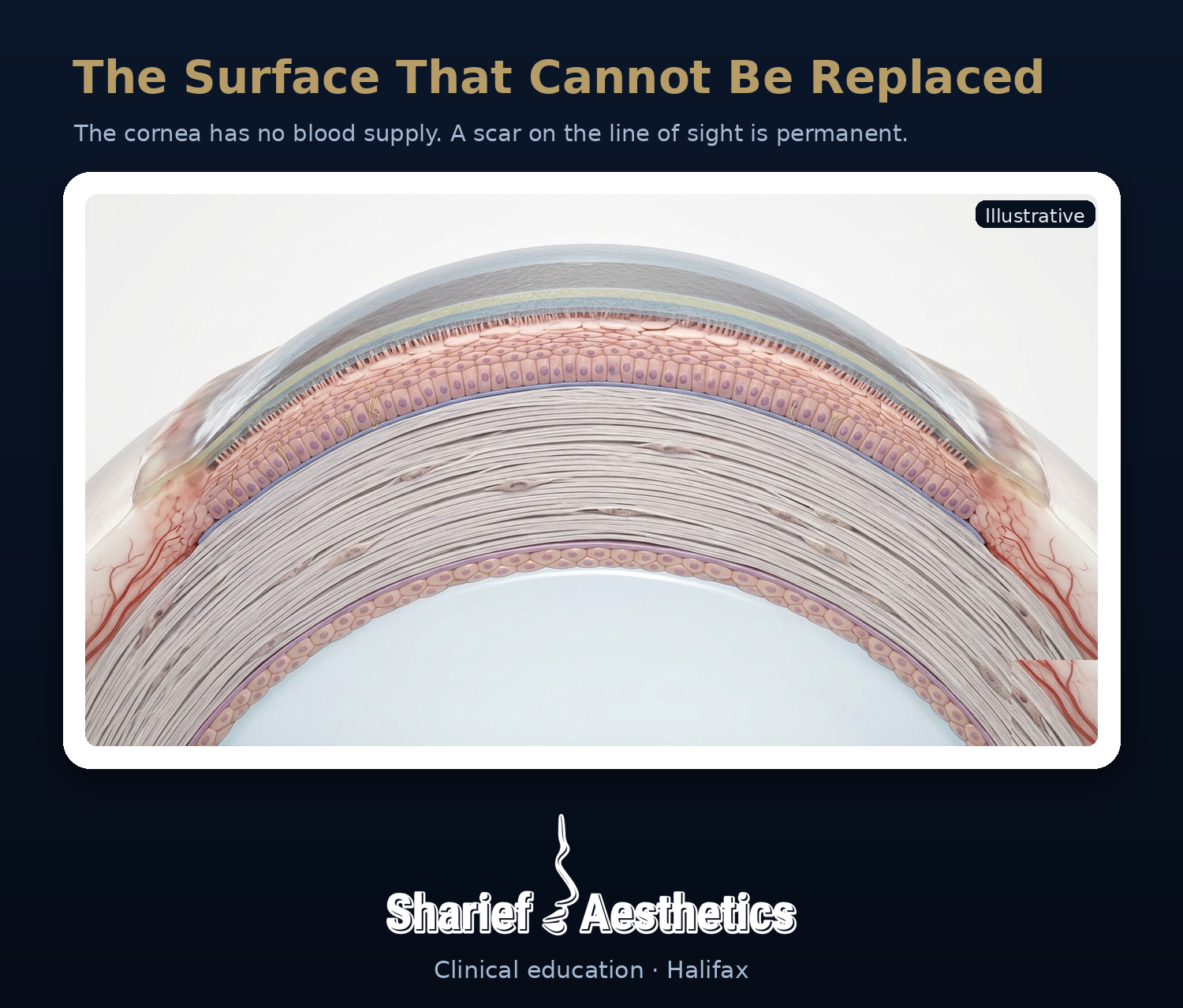
Skin renews itself; the eye does not. The cornea is clear, has no blood supply, and is unforgiving. A serious insult scars, and a scar on the line of sight is permanent. More of the brain is given to vision than to any other sense, and when people imagine losing a sense, this is the one they name first.
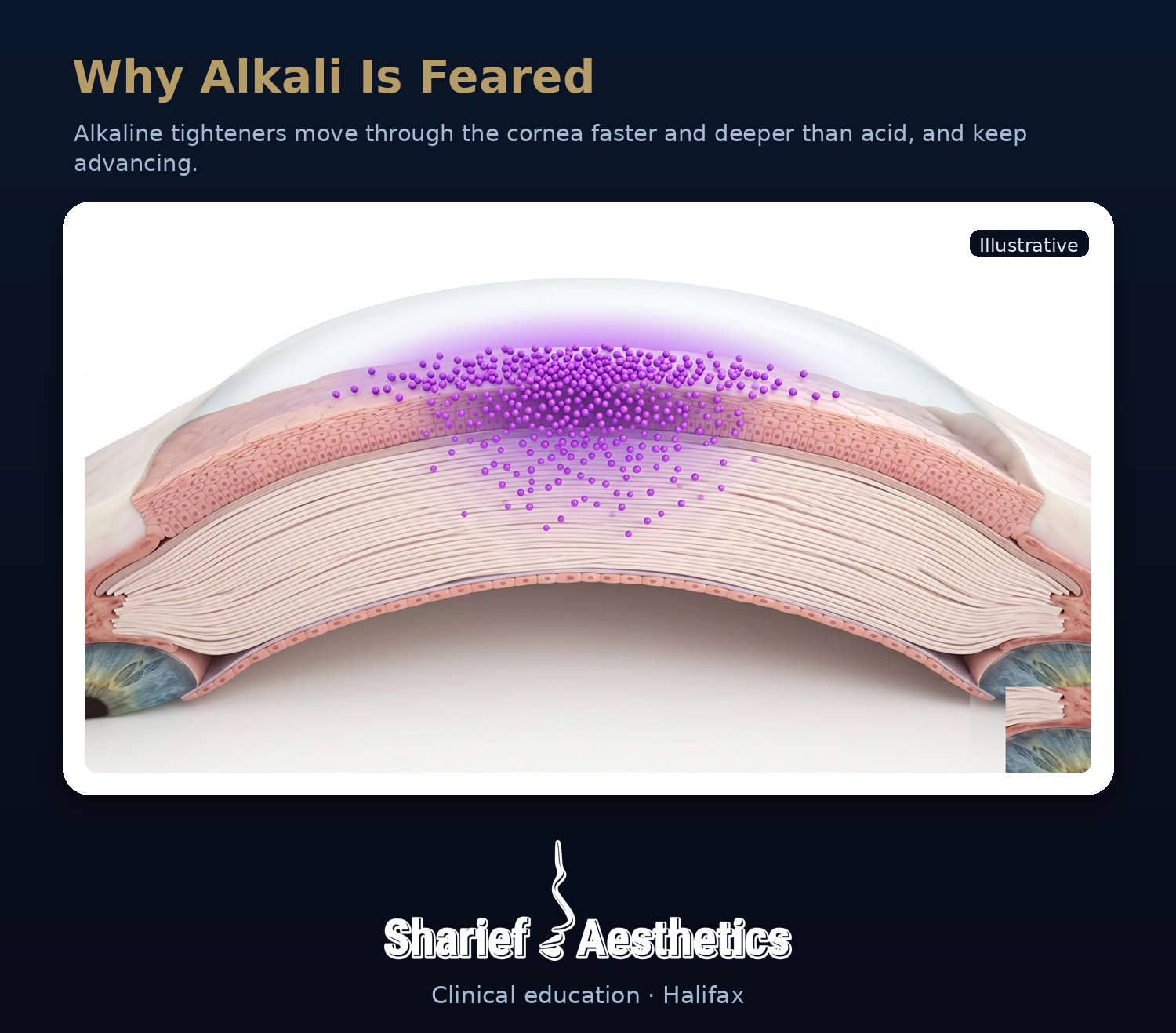
Many tightening formulas are alkaline, and alkali is the chemistry eye surgeons fear, because it moves through the cornea faster and deeper than acid and keeps advancing after contact.
Short of any dramatic injury, repeated irritation at the lid margin wears down the tear film and the glands that keep the eye comfortable, which is how chronic dry eye and meibomian gland dysfunction begin. Those are not small inconveniences. They are daily burning, grit, light sensitivity, and fluctuating vision that people carry for years.

So weigh it plainly. On one side, a few hours of a slightly tighter looking lid. On the other, any avoidable risk to an organ you cannot replace. There is no version of that arithmetic where the cream wins. Anything that firms by tightening the skin of the eyelid is not worth a risk to your sight. Protect your vision first, every time.
Under-eye bag treatment: what actually works
Effective under-eye bag treatment starts with matching the approach to the cause, not to the advertisement.
For herniated fat, the only definitive correction is surgical. A lower blepharoplasty, performed by an oculoplastic or plastic surgeon, removes or repositions the fat pads and restores a smooth contour. It is a real procedure with real recovery and real cost, and for the right person it is the one thing that solves a true bag.
For skin laxity, energy-based skin tightening such as radiofrequency microneedling (Morpheus8) can firm the skin envelope over time by prompting new collagen. It improves the skin, not the fat beneath it.
For fluid and puffy eyes, the simple measures are the ones that work: less salt, sleeping with the head raised, cool compresses, and addressing the sleep and stress behind it. The gain is real but temporary.
For a tear-trough shadow, tear trough fillers, a small and precise amount of dermal filler placed by an experienced injector, can soften the hollow and the dark circle it casts in carefully chosen people. Tear trough filler does not remove fat, and in the wrong candidate, where there is real herniation or fluid, it can make the area look worse. It is a fine tool, not a default.
The bottom line
Under-eye bags are mostly a structural problem wearing a skincare disguise. No cream removes them. The firming products that promise the most are the ones to avoid, not because they fail, but because the eye is far too valuable to gamble on a few hours of cosmetic effect. The useful path begins with working out which of the four causes is yours, and matching the under-eye bag treatment to the cause rather than to the advertisement.
If the area under your eyes bothers you, the most useful first step is an assessment to find out which of these is actually at play for you, so that anything you do is aimed at the real cause. You are welcome to book a consultation at our Halifax clinic. You will leave understanding your options, including the option to do nothing.
Under-eye bags: common questions
Can eye cream remove under-eye bags? No. A true under-eye bag is herniated orbital fat sitting below the skin, and a cream cannot reach or remove fat. It may smooth fine texture for a few hours, but the bag returns.
Do tear trough fillers get rid of under-eye bags? Tear trough fillers can soften a tear-trough shadow and the dark circle it casts in selected people, but they do not remove herniated fat. In the wrong candidate they can make a bag look worse, so an assessment comes first.
What is the best under-eye bag treatment? There is no single best treatment, because the right one depends on the cause. True fat herniation is corrected with a lower blepharoplasty, skin laxity with radiofrequency microneedling, fluid and puffy eyes with simple daily measures, and a tear-trough shadow sometimes with tear trough filler.
Are under-eye firming creams safe? The products that firm by tightening the lid carry real risk to the eye, because lid skin opens onto the ocular surface. The benefit is brief and cosmetic, and it is not worth the risk to your sight.
What is the difference between puffy eyes and under-eye bags? Puffiness is fluid that comes and goes with salt, sleep, and stress. An under-eye bag is structural fat that stays. Telling them apart decides what helps.
This article is general education, not individual medical advice. Under-eye concerns differ from person to person, and the right approach depends on an in-person assessment. If you notice any change in your vision or have an eye condition, please see a physician or eye specialist.