Morpheus8 Facial Rejuvenation: Acne Scars, Laxity and What to Expect
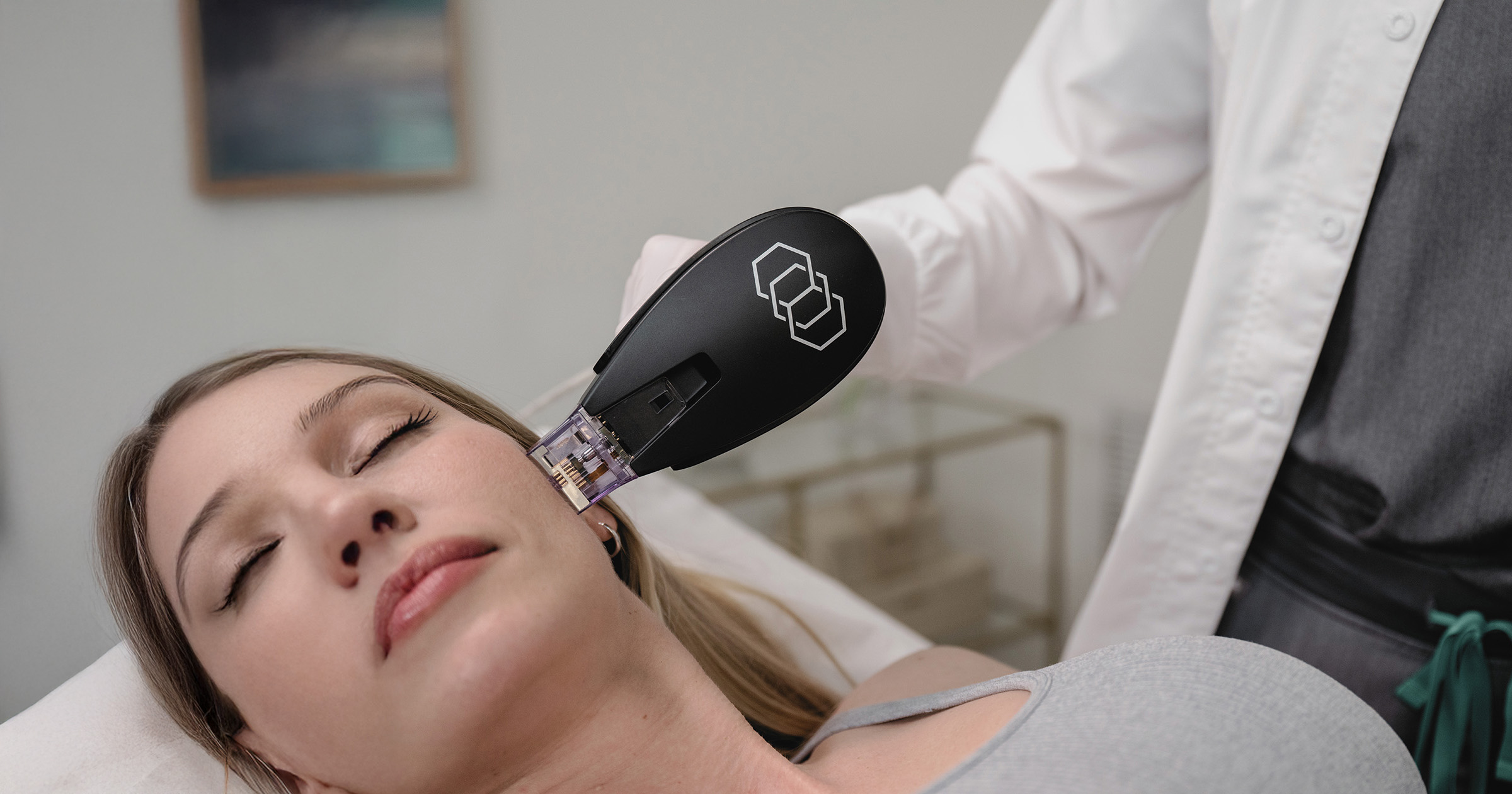
Radiofrequency microneedling changed what is possible without surgery. It also gets oversold, and the gap between what it does well and what it is advertised to do is where most disappointment lives.
I have used this technology through three generations — Fractora, the first Morpheus8, and now the second-generation device. What follows is what it genuinely does for scarring and laxity, how many sessions that honestly takes, and where a different treatment would serve you better.
What It Does Beneath the Surface
Traditional microneedling works on the uppermost layer of skin. Morpheus8 delivers radiofrequency heat into the subdermal layers, where the structural foundation sits. The controlled injury triggers a healing response, and the body lays down new collagen and elastin, remodeling tissue from underneath rather than resurfacing it from above.
That distinction — working underneath rather than removing the surface — is the whole reason to choose it, and also the reason it is not always the right answer.
Acne Scarring: The Honest Version
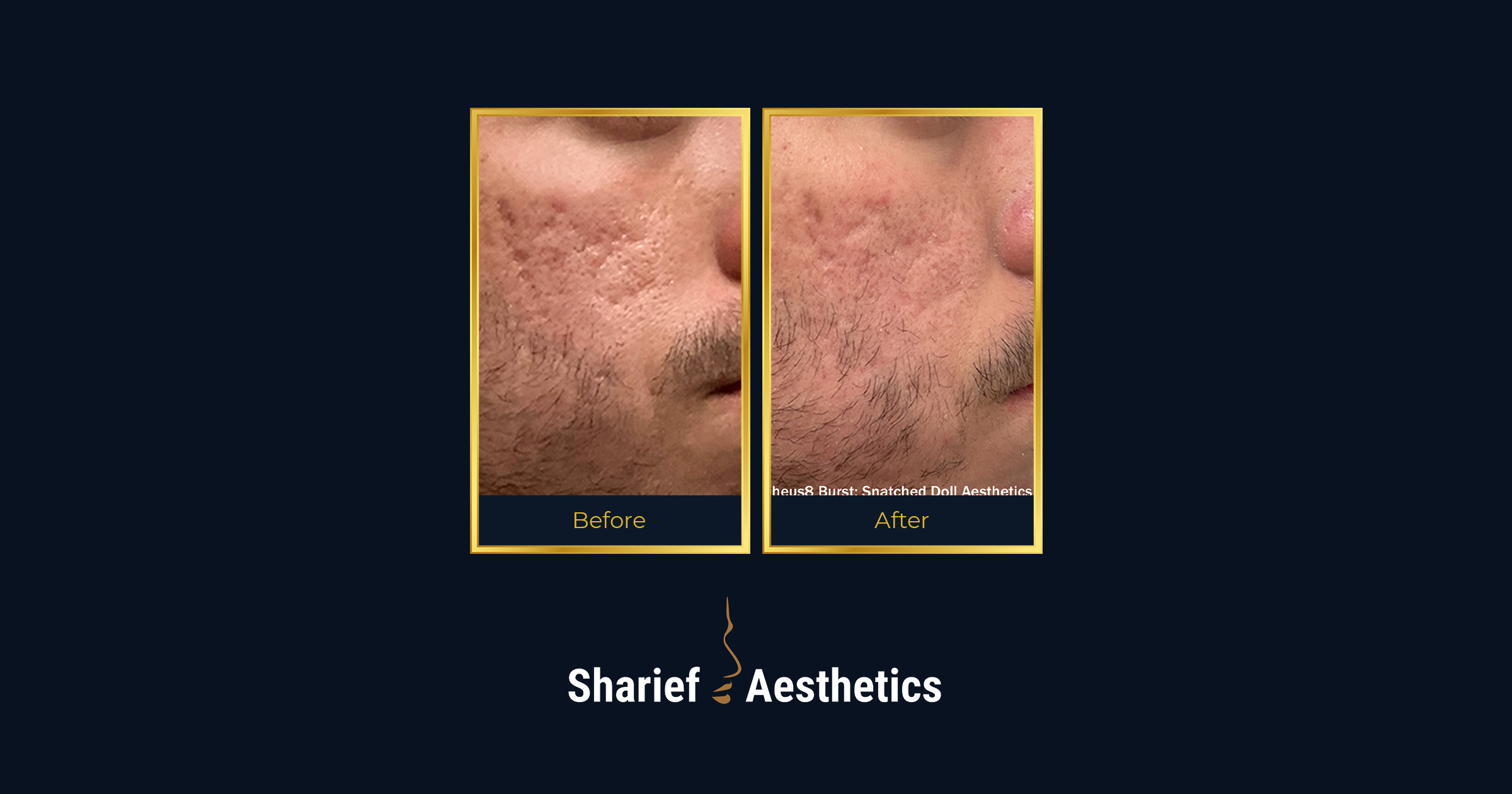
Deep cystic acne leaves fibrous bands beneath the skin that tether it downward, creating the pitted and rolling depressions that remain long after the acne itself has gone. Radiofrequency energy breaks down those restrictive bands while stimulating collagen to build the depression back up from below.
That is real. It is also not erasure, and any clinic promising erasure is setting you up to be disappointed at your six-week mirror check.
Expect three to four sessions. Occasionally I will use resurfacing tips at session three or four for final refinement, once the deeper work has done its part. Improvement is progressive across that course rather than dramatic after any single visit.
The Other Option You Should Know About
There is a more aggressive approach to deep scarring: ablative laser, which removes the surface of the skin and lets it heal in. For genuinely deep scarring it is the more powerful tool, and I am not going to pretend otherwise.
The trade is downtime. Real downtime — a healing process measured in weeks, with the appearance that goes along with it, and a recovery not every person’s life or work can accommodate. Morpheus8 works underneath instead of removing the top, so recovery runs in days rather than weeks, at the cost of needing a course of sessions to arrive at the result.
Both are legitimate medicine. Which is right depends on how deep your scarring actually is and how much downtime you can genuinely take. I will show you what each looks like at every stage, including the parts nobody photographs, and you will make that decision rather than have it made for you.
Laxity, Texture and the Jawline
Where Morpheus8 is least ambiguous is skin quality and mild to moderate laxity — texture, pore appearance, early jawline softening, the neck. Deep tissue remodeling is precisely the job it was built for, and for the right candidate the results are substantial.
It is not a facelift. Where laxity is advanced, or where the underlying problem is descended fat and a loosened retaining ligament rather than skin quality, energy will not fix it — the reasoning is set out in The Truth About the Nefertiti Neck Lift.
Scale: Two Depths on the Face, Three on the Body
Earlier radiofrequency microneedling delivered energy at one depth per pass. Scale delivers to more than one tissue layer in a single pass, which means less bulk heat driven indiscriminately into tissue and considerably more control over where energy goes.
On the face that means two depths, because the facial tip reaches 4mm and there is not room for a third. On the body, where Burst Deep reaches 8mm, it is three. The device is the same; the anatomy decides the rest. That distinction is covered further in The Architecture of Skin Remodeling.
Comfort, and Why It Is Not Just Comfort
A patient in pain moves. They flinch, tense, and pull away, and energy cannot be delivered consistently into tissue that is moving. So the practitioner turns the settings down, and the treatment that gets delivered is not the treatment that was planned.
That is why the protocol here is medical-grade topical anaesthetic plus oral medication as standard. Not as a courtesy — it is what allows the treatment to be delivered at the strength that actually works.
If you take the oral medication, you cannot drive yourself home. It is not compatible with driving and you will need a lift. Some patients elect topical only and tolerate it well, and we discuss that openly. But the default exists for a clinical reason, not a comfort one.
Recovery and Timeline
Your skin will look and feel like a moderate sunburn for 24 to 48 hours, with visible micro-lesions for a few days. Makeup can usually go on after 48 hours.
There is a visible glow within the first week, but that is not the result. Collagen remodeling is slow by nature — skin becomes progressively tighter, smoother and more refined over three to six months. Judging the outcome at week two is judging an unfinished process.
Advised, Not Sold
Morpheus8 is a powerful tool and it is not right for everyone. If your skin type, anatomy or goals are not a safe or effective match, I will tell you so and suggest something that is — or tell you that nothing is, which is sometimes the answer.
I would rather send you away informed than sell you a promise I cannot deliver.